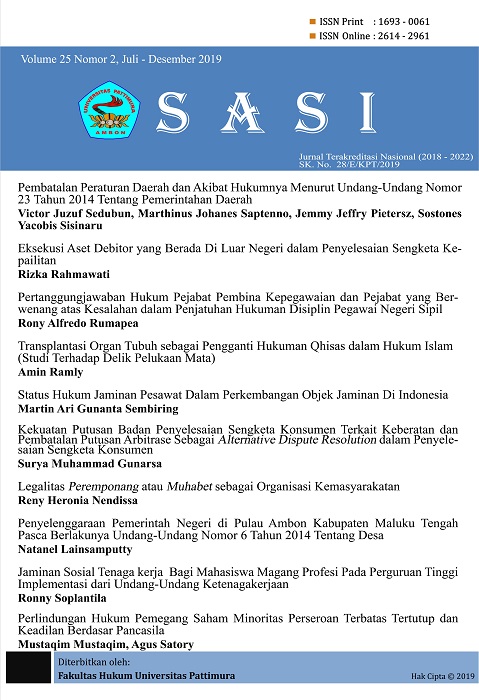
Jaminan Sosial Tenaga kerja Bagi Mahasiswa Magang Profesi Pada Perguruan Tinggi Implementasi dari Undang-Undang Ketenagakerjaan
DOI:
https://doi.org/10.47268/sasi.v25i2.221Keywords:
Student Internship, Social security protection, implementationAbstract
Higher education will send final semester students to internships in government agencies and private companies to provide experience before entering the workforce, but in practice never pay attention to the form of protection for students, while the labor law provides space for student interns to enter into workforce social security program, for this purpose the purpose of this study is to examine whether student internships can be equated with workers and are entitled to workforce protection. Guaranteed labor protection for intern students is very important both for intern students, universities and government agencies and private companies. Because it will protect students, comfort for family students and universities will feel free from moral burdens in the event of work accidents in government agencies and private companies where the student is placed.References
Buku
[1] Uwiyono, Aloysius. (2018), Asas - Asas Hukum Perburuhan, Jakarta: Rajawali Pers.
[2] Wijayanti, Asri. (2014), Hukum Ketenagakerjaan Pasca Reformasi, Cetakan ke 4, Jakarta: Sinar Grafika.
[3] Suwondo, Candra. (2004), Outsourcing, Implementasi Di Indonesia, Jakarta: Gramedia.
[4] Soepomo, Iman. (1985), Pengantar Hukum Perburuhan, Jakarta: Djambatan.
[5] Sembiring, Jimmy J. (2016), Hak dan Kewajiban pekerja Berdasarkan Peraturan Terbaru Cetakan Pertama, Jakarta: Visimedia.
Jurnal dan Lain-Lain
[6] Adillah, Siti Ummu dan Anik, Sri. (2015), Kebijakan Jaminan Sosial Tenaga Kerja Sektor Informal Berbasis Keadilan Sosial Untuk Meningkatkan Kesejahteraan, Yustisia. Vol. 4 No. 3.
[7] Kahfi, Ashabul. (2016), Perlindungan Hukum Terhadap Tenaga Kerja, Jurisprudentie, Volume 3 Nomor 2.
Downloads
Published

Article History
Issue
Section
License
Copyright (c) 2019 Ronny Soplantila

This work is licensed under a Creative Commons Attribution-NonCommercial 4.0 International License.
How to Cite
Article Metrics