
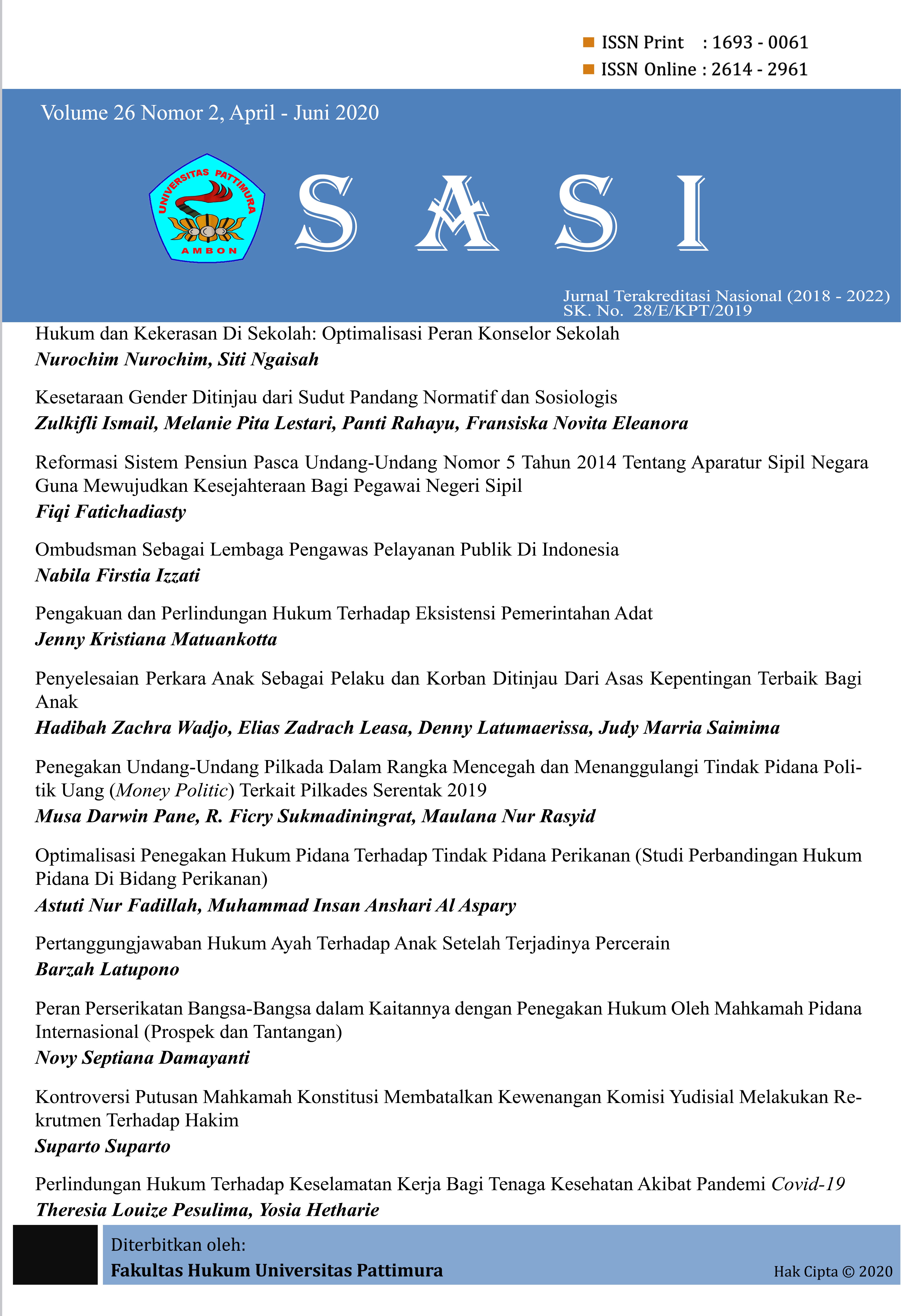
Kesetaraan Gender Ditinjau dari Sudut Pandang Normatif dan Sosiologis
DOI:
https://doi.org/10.47268/sasi.v26i2.224Keywords:
Equality, Gender, DiscriminationAbstract
This study discusses that gender equality must be paired with justice and justice, between men and women must be equal and there must be no differences or contradictions. A normative study looking at it from the perspective of the following law is that submission will discuss the rights of a woman, everyone has equal rights without exception, and those rights have existed since man is in a supported reserve. Research methods using the normative juridical method by reviewing the literature and legislation, where the findings or results have met the requirements for the rights of everyone listed in the regulations of Law Number 39 of 1999, but viewed from the point of view seen sociological that in society assumes that gender equality can occur if each party considers to be responsible, their duties and roles. While the usefulness of this research provides benefits and participation of law enforcers, the community must not represent gender differences or injustice in the community, all people have the same rights, novelty in this study agrees and then gender in community life to prioritize and prioritize there will be the right to life, because that right is a very determined right granted to all people such as the right not to increase torture, get education, health, and eliminate the perception of gender inequality in any field or area of life, because everyone is the same and supports , in the field of law, and also government.References
Buku
[1] Fakih, M. (2007). Analisis Gender dan Transformasi Sosial, Yogyakarta: Pustaka Pelajar.
[2] Gandhi, L. L. M. (2012). Disiplin Hukum Yang Mewujudkan Kesetaraan Dan Keadilan Gender, Jakarta : Yayasan Pustaka Obor Indonesia.
[3] Graham, D. S. (2018). Keberagaman Gender di Indonesia, Jakarta : Yayasan Pustaka Obor Indonesia.
[4] Luhulima, A. S. (2014). CEDAW : Menegakkan Hak Asasi Perempuan, Jakarta : Yayasan Pustaka Obor Indonesia.
[5] M. Echols John dan Sadily, H. (1983). Kamus Inggris Indonesia, Jakarta: Gramedia.
[6] Soekanto, S & Mamudji, S. (2015). Penelitian Hukum Normatif (Suatu Tinjauan Singkat), Jakarta : Rajawali Pers.
[7] Zuhriah, E. (2008). Gender Dalam Perspektif Hukum dan HAM di Indonesia (Seri Bunga Rampai), Malang : UIN Malang Press.
Jurnal
[8] Amalia, M. (2011). "Kekerasan Perempuan Dalam Perspektif Hukum Dan Sosiokultural", Jurnal Wawssan Hukum, 25 (02).
[9] Efendy, R. (2014). "Kesetaraan Gender Dalam Pendidikan", Jurnal Al-Maiyyah, 07 (02). DOI: https://doi.org/10.35905/almaiyyah.v7i2.239
[10] Hasan, B. (2019). "Gender dan Ketidakadilan", Jurnal SIGNAL, 7 (1). https://doi.org/10.33603/signal.v7i1.1910 DOI: https://doi.org/10.33603/signal.v7i1.1910
[11] Krisnalita, L. Y. (2018). "Perempuan, HAM, dan Permasalahannya Di Indonesia", Binamulia Hukum, 7 (1). https://doi.org/10.37893/jbh.v7i1.15 DOI: https://doi.org/10.37893/jbh.v7i1.15
[12] Prantiasih, A. (2012). "Hak Asasi Manusia Bagi Perempuan", Jurnal Pendidikan Pancasila dan Kewarganegaraan, 25 (1).
[13] Ulfatun, H dan Najahan, M. (2017). "Gender And Politics : Keterlibatan Perempuan Dalam Pembangunan Politik", SAWWA, 12 (3). https://doi.org/10.21580/sa.v12i3.2080 DOI: https://doi.org/10.21580/sa.v12i3.2080
[14] Waston, M. (2014). "Pengarusutamaan Gender dalam Program Pembangunan", Jurnal Pendidikan Ilmu-Ilmu Sosial, 6 (2). DOI: https://doi.org/10.24114/jupiis.v6i2.2292
Online/World Wide Web
[15] http://ditjenpp.kemenkumham.go.id/hukum-pidana/653-undang-undang-no-23-tahun-2004-tentang-penghapusan-kekerasan-dalam-rumah-tangga-uu-pkdrt.html, (Diakses Kamis, 26 Desember 2019).
[16] http://kapalperempuan.org/enam-masalah-perempuan-indonesia, (Diakses Jumat, 27 Desember 2019).
Downloads
Published

Article History
Issue
Section
License
Copyright (c) 2020 Zulkifli Ismail, Melanie Pita Lestari, Panti Rahayu, Fransiska Novita Eleanora

This work is licensed under a Creative Commons Attribution-NonCommercial 4.0 International License.
How to Cite
Article Metrics