
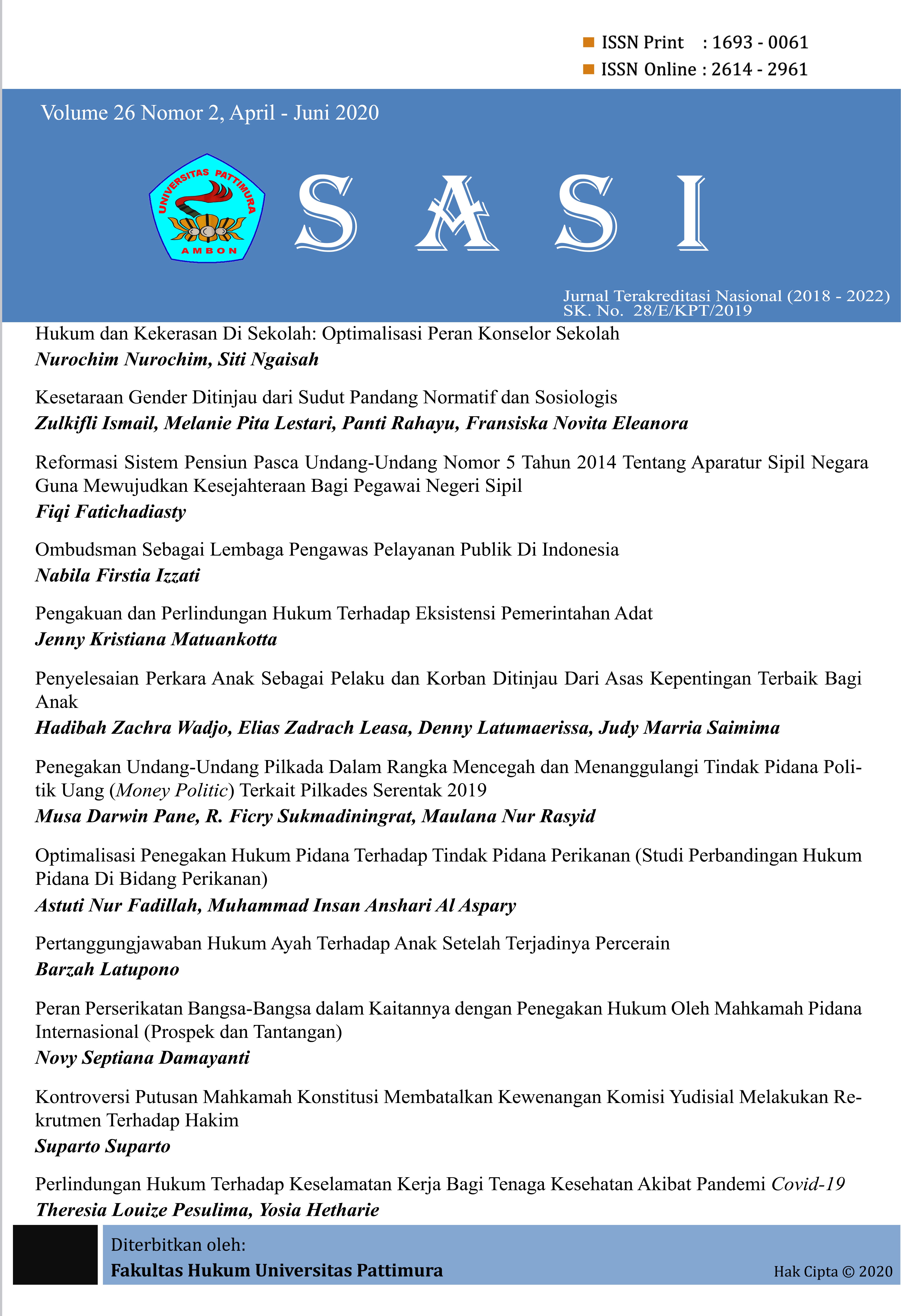
Reformasi Sistem Pensiun Pasca Undang-Undang Nomor 5 Tahun 2014 Tentang Aparatur Sipil Negara Guna Mewujudkan Kesejahteraan Bagi Pegawai Negeri Sipil
DOI:
https://doi.org/10.47268/sasi.v26i2.231Keywords:
Pension Reform, Well-being, State Civil ApparatusAbstract
Pension is a right that is obtained by a civil servant. Civil servants with the aim of improving welfare. This is in accordance with Law Number 43 of 1999 concerning Personnel Fundamentals, Article 32 which states to increase the excitement that is carried out by seeking the welfare efforts of Civil Servants, welfare businesses that contain remuneration programs. However, there are still some shortcomings in one of the retirement age limits that have not been clearly stipulated in a regulation. With this research, it is expected to discuss a complete and in-depth acceptance of the substantive revenue from the Civil Servants Retirement Age Limit and also changes in the income system stated by the government. The methodology used in this study consists of a qualitative description and study of the process of reforming the civil service recipient system, which is distributed in terms of legal basis. After the enactment of Law Number 5 of 2014 concerning State Civil Apparatus.References
Buku
[1] Djatmika, S. dan Marsono. (1995) Hukum Kepegawaian Di Indonesia, Jakarta:Djambatan.
[2] Ibrahim, J. (2005). Teori Dan Metodologi Penelitian Hukum Normatif, Surabaya: Bayu Media Publishing.
Jurnal
[3] Haryanto. (2014). “Implementasi Undang-Undang ASN Dan Implikasinya Terhadap Manajemen Pengelolaan Jabatan Fungsiona”, Simpul Perencana, 22 (2).
[4] Hadi, A. (2017). “Rancangan Sistem Jaminan Pensiun dan Hari Tua Pegawai Negeri Sipil (PNS)”, Jurnal Civil Apparatus Policy, 003 (1)
[5] Rakhmawanto, A. (2014). “Program Pensiun Pegawai Negeri Sipil: Analisis Prespektif Perbaikan Sistem Pensiun PNS Dari Pay As You Go Ke Fully Funded”, Jurnal Kebijakan Dan Manajemen PNS, 8 (2).
[6] Suryanto. (2014). “Sistem Pensiun PNS: Mewujudkan Sistem Pendanaan Pensiun Fully Funded”, Jurnal Kebijakan Dan Manajemen PNS, 8 (2).
Skripsi, Tesis, Disertasi dan Lain-Lain
[7] Pambudi, A., Kumoro, J. (2014). “Analisis Peraturan Batas Usia Pensiun PNS Dalam UU No. 5 Tahun 2014 Tentang Aparatur Sipil Negara, Fakultas Ilmu Sosial Universitas Negeri Yogyakarta.
[8] Riawan, T. W. (2008). “Hukum Administrasi Negara”, Yogyakarta: Universitas Atmajaya
Online/World Wide Web
[9] Adhi, A. E, “Modul Pengertian Dan Ruang Lingkup Pemberhentian Dan Pensiun Pegawai”, Http://Repository.Ut.Ac.Id/3945/1/ADPG4447-M1.Pdf , (Diakses pada 22 November 2019).
[10] Badan Perencanaan Pembangunan Nasional, “Menuju Perencanaan Profesional, SIMPUL, Perencanaan”, Http://Pusbindiklatren.Bappenas.Go.Id/File/Bukuterbit/Simpul-22.Pdf, (Diakses pada 22 November 2019).
[11] Dewan Perwakilan Rakyat, “Ringkasan Eksekutif Telaahan Kebijakan Sistem Pensiun PNS“, Http://Ppid.Lan.Go.Id/Wp-Content/Uploads/2014/10/Telaahan-Kebijakan-Sistem-Pensiun-PNS.Pdf, (Diakses pada 22 November 2019)
[12] Deasy Ayu, “Dana Pensiun Pegawai Negeri Sipil”, Https://Www.Academia.Edu/30712453/DANA _PENSIUN_ PEGAWAI_NEGERI_SIPIL, (Diakses pada 22 November 2019)
[13] http://Taspen.Co.Id, (Diakses pada 22 November 2019).
[14] “Pensiun”, Http://Bkpsdm.Kuningankab.Go.Id/Pelayanan/Pensiun. (Diakses pada 23 November 2019).
[15] “Pedoman Pemberhentian PNS”, Http://Www.Bkn.Go.Id/In/Peraturan/Pedoman/Pedoman-Berhenti-Pns.html, (Diakses pada 23 November 2019).
Downloads
Published

Article History
Issue
Section
License
Copyright (c) 2020 Fiqi Fatichadiasty

This work is licensed under a Creative Commons Attribution-NonCommercial 4.0 International License.
How to Cite
Article Metrics