
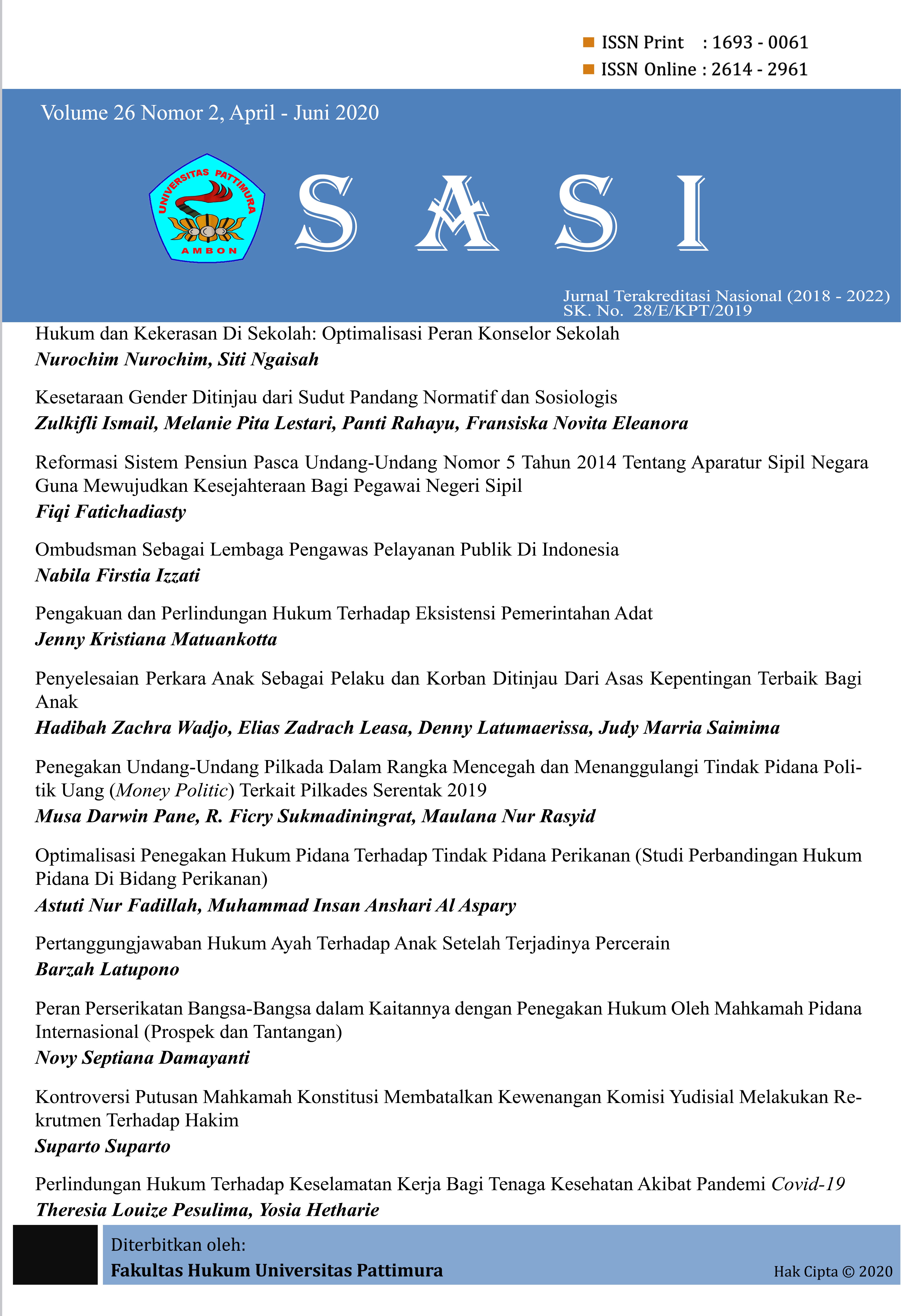
Peran Perserikatan Bangsa-Bangsa dalam Kaitannya dengan Penegakan Hukum Oleh Mahkamah Pidana Internasional (Prospek dan Tantangan)
DOI:
https://doi.org/10.47268/sasi.v26i2.253Keywords:
Enforcement of law, UN, International Criminal CourtAbstract
International law in its development moves dynamically according to international community interactions. In the development of international law has spawned an international organization, namely the United Nations (UN). International courts relating to the UN status. The UN has laid the framework of the kosnstitusionic on the underlying instrument of the Charter with the determination of all the members of the UN to avoid the recurrence of World War threats that have twice occurred and have caused A threat to all mankind. THE un-formed International Criminal Court is backed by many demands for justice for its extraordinary crimes (the most serious crime). The International Criminal Court aims to end impunity for perpetrators of gross human rights violations and to give a share of the prevention of the most serious crimes against human rights under international law, as well as Ensure international justice and support the achievement of objectivesof the United Nations Charter principles. Based on the description the problem that will be discussed in this article is the role and authority of THE International Organization (PBB) in maintaining international peace and security in resolving the problems that Conducted by the International Criminal Court (ICC).This Writing uses legal research methods is normative with the research of secondary data and described descriptively.
References
Buku
[1] Adolf, H. (2004). Hukum Penyelesaian Sengketa Internasional. Bandung: Sinar Grafika.
[2] Adolf, H. (2015). Aspek-Aspek Negara Dalam Hukum Internasional. Bandung: Keni Media.
[3] Diantha, I. M. P. (2014). Hukum Pidana Internasional Dalam Dinamika Pengadilan Pidana Internasional. Jakarta: Kencana Prenada Media Group.
[4] Hiariej, E. (2009). Pengantar Hukum Pidana Internasional. Jakarta: Erlangga.
[5] Muladi. (2001). "Yurisdiksi Dan "Adminissbility" Pengadilan Pidana Internasional". Hukum dan Pembangunan.
[6] Parthiana, I. W. (2005). Hukum Perjanjian Internasional. Bagian II, Bandung: Mandar Maju.
[7] Rudy, T. M. (2011). Hukum Internasional 2. Bandung: Refika Aditama.
[8] Shaw, M. N. (2013). Hukum Internasional. Bandung: Nusa Media.
[9] Siswanto, A. (2015). Hukum Pidana Internasional. Yogyakarta: Andi.
[10] Sefriani, (2016). Peran Hukum Internasional Dalam Hubungan Internasional Kontemporer. Jakarta: Rajawali Pers.
[11] Widodo. (2017). Hukum Internasional Publik. Yogyakarta: Aswaja Pressindo.
Jurnal
[12] Gunakaya, W. (2013). "Peranan Dan Prospek "International Criminal Court" Sebagai International Criminal Policy Dalam Menanggulangi "Internasional Crimes". Jurnal Wawasan Hukum, 29 (2).
[13] Hadju, Z. A. A. (2019). "Anotasi Spirit Unable Dan Unwilling Terhadap Kejahatan Perang Israel Palestina". Jambura Law Review, 1 (2). https://doi.org/10.33756/jalrev.v1i2.1990 DOI: https://doi.org/10.33756/jalrev.v1i2.1990
[14] Jain, N. (2005). "A Separate Law For Peacekeepers: The Clash Between The Security Council And The International Criminal Court". The European Journal Of International Law, 16 (2). https://doi.org/10.1093/ejil/chi116 DOI: https://doi.org/10.1093/ejil/chi116
[15] Kocar, Y. (2015). "The Relationship Between The International Criminal Court And The United Nations Security Council". Law & Justice Review, 6 (11).
[16] Katiandagho, K. (2016). "Kewenangan Mahkamah Pidana Internasional Untuk Mengadili Pelaku Kejahatanpelanggaran Ham Berat Dalam Suatu Negara Tanpa Adanya Permintaan Dari Negara Tuan Rumah". Jurnal Ilmiah.
[17] Obura, K. (2015). "The Security Council And The International Criminal Court: When Can The Security Council Defer A Case". Strathmore Law Journal. DOI: https://doi.org/10.52907/slj.v1i1.9
[18] Suwardi, S. S. (2003). "Beberapa Catatan Mahkamah Pidana Internasional (International Criminal Court) Dalam Kaitannya Dengan Perserikatan Bangsa- Bangsa (PBB)". Hukum dan Pembangunan, 33 (4). https://doi.org/10.21143/jhp.vol33.no4.1424 DOI: https://doi.org/10.21143/jhp.vol33.no4.1424
[19] Sefriani, (2009). "Kewenangan Dewan Keamanan Menghentikan Yurisdiksi ICC : Studi Kasus Resolusi Dewan Keamanan Nomor 1497 Tahun 2003", Jurnal Hukum, 16 (1). https://doi.org/10.20885/iustum.vol16.iss1.art3 DOI: https://doi.org/10.20885/iustum.vol16.iss1.art3
Skripsi, Tesis, Disertasi dan Lain-Lain
[20] Anditya, A. W. (2017). Implikasi Hak Referral Dan Hak Deferral Dewan Keamanan Perserikatan Bangsa-Bangsa Terhadap Penegakan Hukum Pidana Internasional Oleh Mahkamah Pidana Internasional, Tesis, Universitas Gadjah Mada.
Online/World Wide Web
[21] Matamata Politik. (2018). Luka PBB Laporkan Jumlah Palestina Yang Terus Bertambah Di Pawai Gaza. Retrieved from https://www.matamatapolitik.com/40-mati-5-511-lukaluka-pbb-laporkan-jumlah-korban.
Downloads
Published

Article History
Issue
Section
License
Copyright (c) 2020 Novy Septiana Damayanti

This work is licensed under a Creative Commons Attribution-NonCommercial 4.0 International License.
How to Cite
Article Metrics