
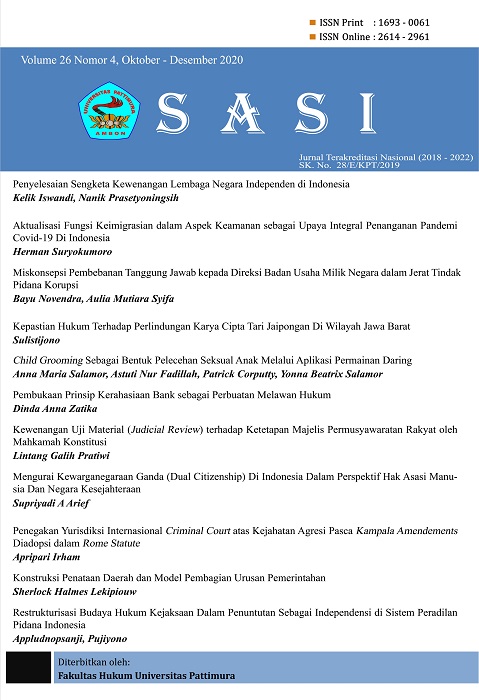
Penyelesaian Sengketa Kewenangan Lembaga Negara Independen di Indonesia
DOI:
https://doi.org/10.47268/sasi.v26i4.283Keywords:
Competence Dispute, Constitutional Court, Independent State OrganAbstract
Competence dispute which involves independent state organs occur several times in Indonesia has an impact on obstruction of competence. Several cases of competence dispute which involve independent state organ have been submitted to the Constitutional Court but not all have been granted. This study aims to examined the concern of competence dispute which involves independent state organ and factors of independent state organ can fulfill the subjectum litis criteria of SKLN in Constitutional Court. The research method is normative by using primary, secondary, and tertiary legal materials, collected from library research. This research analytical data use the statute approach and case approach. The results of this study indicate that the authority of the Constitutional Court does not specifically regulate state institutions that can be subjectum Litis SKLN in the Constitutional Court, there is a gap accommodated by the Constitutional Court in several decisions.References
Jurnal
[1] Eddyono, L. W., (2010), "Penyelesaian Sengketa Kewenangan Lembaga Negara oleh Mahkamah Konstitusi", Jurnal Kostitusi, 7 (3): 1-48.
[2] Hendarman. (2012). "Peran Dewan Pendidikan dalam Meningkatkan Mutu Pelayanan Pendidikan", Jurnal Pendidikan dan Kebudayaan, 18 (1).
https://doi.org/10.24832/jpnk.v18i1.67
[3] Kadarsih, S. (2010). "Tugas dan Wewenang Ombudsman Republik Indonesia dalam Pelayanan Publik Menurut UU No. 37 Tahun 2008". Jurnal Dinamika Hukum, 10 (2). https://doi.org/10.20884/1.jdh.2010.10.2.150
[4] Lestari, D. P. (2018). "Peran Komisi Perlindungan Anak Indonesia (KPAI) dalam Perlindungan Korban Kekerasan Anak". Jurnal Martabat: Jurnal Perempuan dan Anak, 2 (1). https://doi.org/10.21274/martabat.2018.2.1.51-70
[5] Patra, R. (2012). "Efektivitas Kelembagaan Komnas Perempuan dalam Perlindungan HAM bagi Perempuan di Indonesia". Jurnal Masalah-Masalah Hukum, 41 (4).
[6] Pigome, M. (2011). "Implementasi Prinsip Demokrasi dan Nomokrasi dalam Struktur Ketatanegaraan RI Pasca Amandemen UUD 1945". Jurnal Dinamika Hukum, 11 (2). https://doi.org/10.20884/1.jdh.2011.11.2.191
[7] Sambodo, S. (2017). "Pengawasan Komisi Penyiaran Indonesia Daerah Riau Terhadap Penyelenggaraan Penyiaran TV Kabel di Pekanbaru 2015-2016". Jurnal JOM FISIP, 4 (2).
[8] Simamora, J. (2015). "Comparison of Constitutional Court Authority between Indonesia and South Korea". Jurnal Dinamika Hukum, 15 (3). https://doi.org/10.20884/1.jdh.2015.15.3.446
[9] Solechan. (2018). "Memahami Peran Ombudsman sebagai Badan Pengawas Penyelenggaraan Pelayanan Publik di Indonesia". Adminitrative Law & Governance Journal, 1 (1).
[10] Tauda, G. A. (2011). "Kedudukan Komisi Negara Independen dalam Struktur Ketatanegaraan Republik Indonesia". Jurnal Pranata Hukum, 6 (2).
[11] Tuage, S. N. (2013). "Perlindungan Hukum Terhadap Saksi dan Korban Oleh Lembaga Perlindungan Saksi dan Korban (LPSK)". Jurnal Lex Crimen, II (2).
Buku
[12] Asshiddiqie, J. (2016). Perkembangan dan Konsolidasi Lembaga Negara Pasca Reformasi. Jakarta: Sinar Grafika.
[13] Mochtar, Z. A. (2016). Lembaga Negara Independen, Dinamika Perkembangan dan Urgensi Penataannya Kembali Pasca-Amandemen Konstitusi. Jakarta: Rajawali Press.
[14] Tauda, G. A. (2012). Komisi Negara Independen. Yogyakarta: Genta Press.
[15] Tim Penyusun Hukum Acara Mahkamah Konstitusi. (2010). Hukum Acara Mahkamah Konstitusi. Jakarta: Sekretariat Jenderal dan Kepaniteraan Mahkamah Konstitusi Republik Indonesia.
[16] Tim Penyusun. (2017). Buku Saku Wartawan. Cet. 7. Jakarta: Dewan Pers.
Skripsi
[17] Iswandi, K. (2020). Penyelesaian Sengketa Kewenangan State Auxiliary Organ di Indonesia. Skripsi. Universitas Muhammadiyah Yogyakarta.
Published

Article History
Issue
Section
License
Copyright (c) 2020 Kelik Iswandi, Nanik Prasetyoningsih

This work is licensed under a Creative Commons Attribution-NonCommercial 4.0 International License.
How to Cite
Article Metrics